

Hindustan Zinc officially launched Project “Zinc Football” today to provide professional football coaching to the rural children of Rajasthan who are in the age group of 5-12 years. Hindustan Zinc has built a world class residential Football Academy at Zawar near Udaipur in Rajasthan with state-of-the-art facilities.
Logo of Zinc Football was also launched by Sunil Duggal, CEO-Hindustan Zinc, President-Vedanta Football – Annanya Agarwal, IG of Udaipur – Vishal Bansal and Collector of Udaipur – Bishnucharan Mallick.
Hindustan Zinc Football Academy is India’s first technology based Academy. The Academy would provide international standard training facilities with ‘F-Cube’ Training and Assessment Technology, the world’s first intelligent and interactive device for football and fitness training, skill assessment, cognitive development, practice and also factor in important parameters like skills, nutrition, physical, psychological and mental development.
The Zinc Football Academy will also be equipped with 3 FIFA Quality Turf and also a 7v7 size Natural Grass Ground for training and practice equipped with Team Dugouts.
The scouting of Football talent was done by Hindustan Zinc by going in the deep rural areas. 4500 children were scanned and finally 30 children have been shortlisted in the first batch which are fully supported by Hindustan Zinc who have also taken the responsibility of giving scholarships to all the students for their formal education also. Zinc Football intends to train over 2000 passionate boys and girls by fully skilled football trainers through 64 community football centres – Zinc Football Schools, across Rajasthan.
Speaking on the launch, Sunil Duggal, CEO – Hindustan Zinc said, “We at Hindustan Zinc are committed for working towards projects that support the public at large. With the launch of Zinc Football, we wish to establish Rajasthan on Indian football map, and eventually take our country to greater heights in sports. Our vision is to develop 10,000 football players in Rajasthan and in the next 3 years and emerge amongst one of the top 25 positions in football across the world.”
“ I was very excited to see Zawar’s ‘Kumar Mangalam Football Tournament”. I saw thousands of people watching matches with great interest. This is when I thought we should develop a full-fledged football academy and scout young talent and give them world’s latest training and other facilities” Sunil Duggal said.
Annanya Agarwal, President, Vedanta Football said, “Being a footballer myself, I am very passionate about football. India has a lot of talent but very little infrastructure. There is definitely a gap between what we need and what we have. This needs to be bridged. Our aim is to put India firmly on the world footballing map and see India among the top-10 teams in Asia and top-25 in the world within the next five years.”
Vishal Bansal, IG-Udaipur said, “I would like to congratulate all the young talented students of Hindustan Zinc Football Academy. I am pleased to see such latest technology being implemented to train the young talent.” Bishnucharan Mallick, Collector, Udaipur said, “Hindustan Zinc has set a benchmark for other corporates as it is working with a lot of vigor and passion in different spheres. I wish them all the best.”
Hindustan Zinc has partnered with ‘The Football Link’, one of India’s premier football development organizations with professional expertise in organizing large-scale football initiatives for developing grassroots football in the country. The Founder of ‘The Football Link’ – Chetan Mishra spoke about the ecosystem of sports which is very different in India and abroad. He said, “There is a lot of talent observed in Rajasthan with high endurance, fitness level and speed amongst the children. Our dream is to see young talented individuals play in the world cup.”
Hindustan Zinc is India’s only and world’s leading integrated Zinc-Lead-Silver producer. The Company has been associated with sports and has been promoting sportsmen for almost 4 decades when the company made its football stadium at Zawar in Rajasthan in 1976. Since last 40 years, National Football Tournaments are being organized every year at Zawar Stadium. The company has also supported several athletes in the past who have brought numerous laurels for the country in international events.
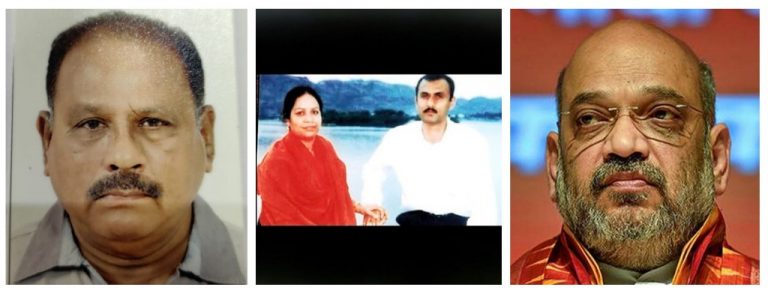
 गुजरात के चर्चित सोहराबुद्दीन शेख, कौसर बी और तुलसीराम प्रजापति एनकाउंटर मामले की जांच करने वाले गुजरात पुलिस के रिटायर्ड इंस्पेक्टर का कहना है कि सरकार द्वारा उन्हें इस मामले में कोर्ट से दूर रखने की भरसक कोशिश की जा रही है.




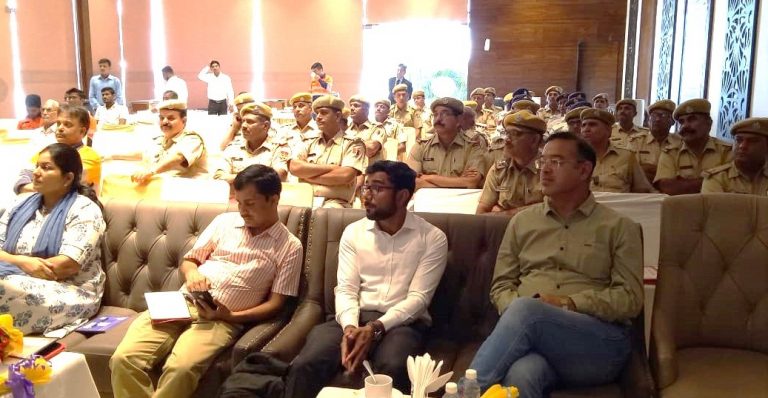




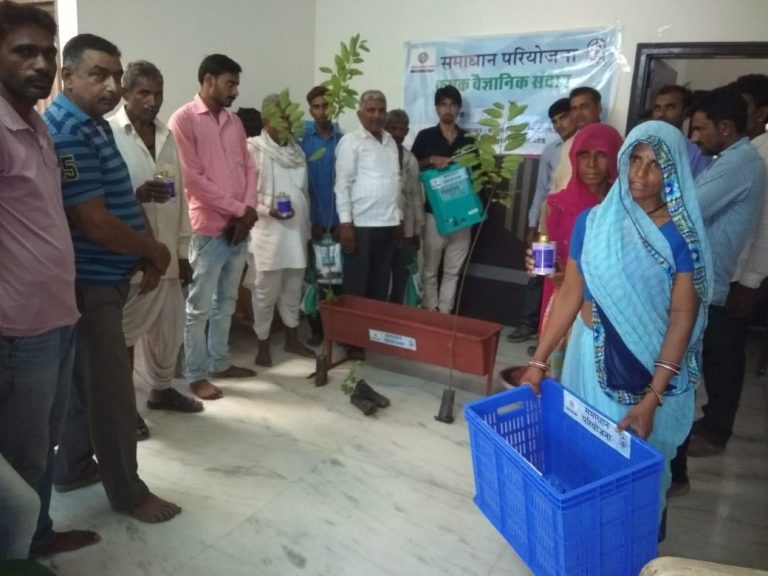
 Under Samadhan Project, 426 farmers at Chittorgarh were taught advanced technologies in farming and horticulture and breed improvement in their cattle through artificial insemination. This event was carried out at Dagla ka Kheda village wherein, out of 16 villages, 5 farmers were given spray machines, 250 farmers were provided with insecticides for the maize crops and 50 farmers were given organic fertilizers. Each farmer present was also given 5 containers to hold fruits and vegetables, 55 farmers cultivating rain-fed crops were provided with 2 kgs of ‘vermus’, 17 farmers of new badi were given 50 saplings each of apple-plum, 4 farmers were given 50 saplings of custard apple, 80 farmers with low fertile lands were given 20 saplings of apple-plum, farmers who reared cattle were given 90 kgs of fodder for the ‘sirohi’ goats and a separate manger was provided to them.